
Packing for a road trip always feels simple until you’re two hours from home and realize you forgot the phone charger, a first-aid kit, or your kid’s favorite snack. A good road trip packing list isn’t just about clothes in a bag; it’s about documents, car safety gear, tech, comfort items, and food working together so nothing derails your trip.
This checklist is built from real road trip planning, whether you’re headed to a national park, chasing fall foliage, or just driving a few states over for the weekend. Use it as-is, or copy it into your notes app before you load the car.
Quick answer: A complete road trip packing list has six core categories: documents & money, car safety/emergency gear, tech & navigation, clothing, food & hydration, and toiletries/health. Pack car-specific items first, then personal items, then food last so nothing spoils.
If you haven’t nailed down your route yet, start with our guide on how to plan a road trip before you pack; your itinerary determines half of what goes in the car.
Table of Contents
- How to Use This Checklist
- Documents, Money & Essentials
- Car Emergency & Safety Kit
- Tech, Navigation & Connectivity
- Clothing & Personal Items
- Food, Snacks & Hydration
- Toiletries & Health
- Comfort & Entertainment
- National Park & Outdoor Add-Ons
- Packing Tips by Trip Type
- Common Road Trip Packing Mistakes
- FAQs
How to Use This Checklist
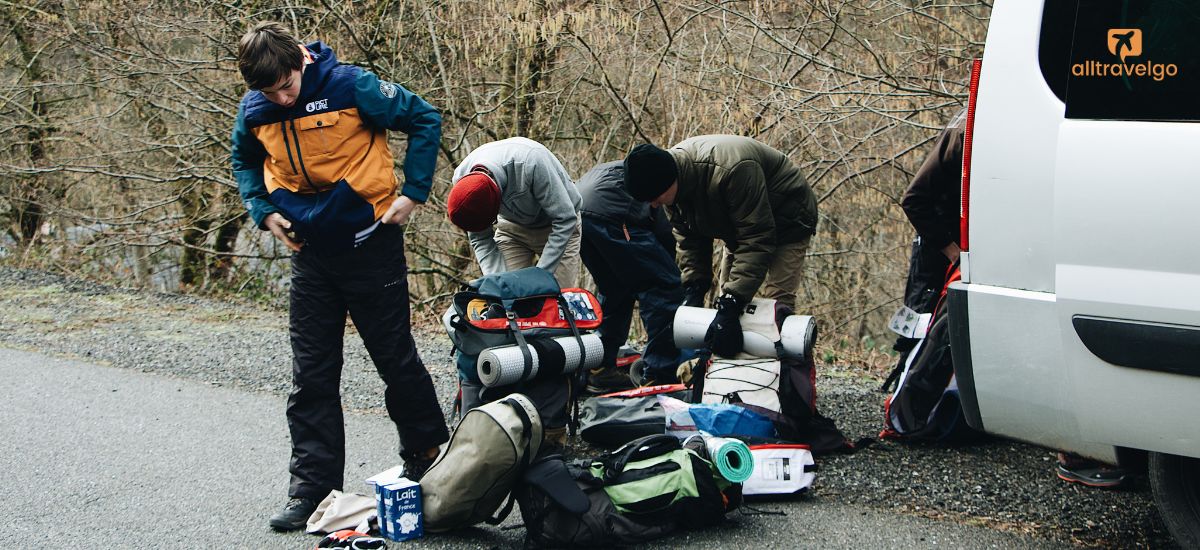
Pack in this order to avoid last-minute chaos:
- Car-first items — safety kit, chargers, and navigation tools go in before anything else.
- Documents and money — keep these in one bag you can grab in seconds.
- Clothing and toiletries — pack by day, not by category, if you’re sharing a small trunk.
- Food and drinks — load these last so they stay cold and don’t get buried.
Print this list, screenshot it, or copy the categories into a notes app; the goal is a system you actually check off, not just skim.
Documents, Money & Essentials

- Driver’s license / ID
- Vehicle registration and proof of insurance
- Roadside assistance card (AAA or insurer)
- National park pass (if visiting parks — see our national park trip cost breakdown for whether an annual pass saves you money)
- Printed hotel/campground confirmations
- Cash in small bills (for tolls, rural gas stations, and parking where cards fail)
- Travel credit card with no foreign transaction fees or good rewards; see our picks for best travel credit cards
- Emergency contact list (written down, not just in your phone)
The most commonly forgotten road trip document is proof of insurance keep a photo of it on your phone and the physical card in the glovebox.
Car Emergency & Safety Kit
This is the category people skip most often and the one that matters most if something goes wrong on a rural stretch with no signal.
- Jumper cables or a portable jump starter
- Spare tire, jack, and lug wrench (check they’re actually in the car, not assumed)
- Tire pressure gauge and a portable air compressor
- Basic tool kit and duct tape
- Flashlight with extra batteries
- Reflective triangles or road flares
- First-aid kit
- Extra windshield washer fluid
- Blanket and a few bottles of water (for breakdowns in cold or hot climates)
- Paper road atlas or printed map as a GPS backup
The National Highway Traffic Safety Administration (NHTSA) and organizations like AAA both recommend keeping a basic emergency and first-aid kit in your vehicle year-round, not just for long trips. Flat tires and dead batteries don’t check the calendar.
A basic car emergency kit should include jumper cables, a spare tire and jack, a first-aid kit, a flashlight, and reflective triangles enough to handle a breakdown safely until help arrives.
Tech, Navigation & Connectivity
- Phone charger + car charger (bring two — one always goes missing)
- Portable power bank (see our upcoming guide on the best portable power banks for travel for options that survive long drives)
- Offline maps downloaded in advance (cell service gaps are common near national parks)
- Car phone mount
- Dash cam (optional, but useful for insurance claims)
- A reliable eSIM or hotspot if you’re crossing states with patchy carrier coverage — our eSIM for USA travel comparison breaks down the best options
- Travel apps downloaded before you lose signal — our list of the best travel apps for road trips and national parks covers navigation, gas price trackers, and campground finders
Yes, download offline maps before a road trip. Cell coverage regularly drops near national parks, mountain passes, and rural highways, and offline Google Maps or a dedicated GPS app prevents you from getting stranded without directions.
Clothing & Personal Items
Pack by activity, not just by day count:
- Weather-appropriate layers (check the forecast for every stop, not just your starting point)
- Comfortable driving shoes + one pair for hiking or walking
- Rain jacket, even in dry-looking forecasts
- Swimsuit (lakes and hotel pools show up more often than planned)
- Sunglasses and a hat
- Pajamas/loungewear
- A dedicated day bag or backpack for hikes and short excursions if national parks are on your route; our guide to best travel backpacks for hiking national parks is worth reading before you buy
Food, Snacks & Hydration
- Reusable water bottles (one per person, refillable)
- Cooler with ice packs
- Non-perishable snacks (nuts, granola bars, dried fruit)
- Sandwiches or pre-made meals for day one
- Trash bags (a full one is inevitable by hour three)
- Reusable utensils and napkins
- Coffee/tea essentials if you’re not stopping every morning
Pack food that doesn’t need refrigeration for the first stretch of driving, and keep perishables in a cooler loaded last, closest to the top, so you’re not digging through the whole trunk at a rest stop.
Toiletries & Health
- Toothbrush, toothpaste, deodorant
- Sunscreen (reapply — this is the most under-packed item on national park trips)
- Bug spray
- Any prescription medications (pack more than you think you’ll need)
- Pain relievers and motion sickness tablets
- Hand sanitizer and wet wipes
- Travel-size laundry detergent for longer trips
Comfort & Entertainment
- ]Travel pillow and a light blanket
- Downloaded playlists, podcasts, or audiobooks (for when signal drops)
- Car games or a road trip bingo printout for kids
- Sunshade for parked stops
- Extra plastic bags for trash or wet clothes
National Park & Outdoor Add-Ons
If your road trip includes stops in a national park, add these on top of the core list. Our US National Parks Road Trip Guide is a good companion for planning the route itself.
- Hiking boots (broken in, not brand new)
- Refillable water bladder or extra bottles for trails
- Bear spray or bear canister (park-dependent check current requirements)
- Binoculars
- Physical trail maps (many parks have no cell service)
- Layered clothing for elevation changes
The National Park Service (NPS) publishes park-specific packing and safety guidance it’s worth checking the page for each park on your route before you go, since requirements (permits, bear canisters, fire restrictions) change by season and location.
Packing Tips by Trip Type
Fall road trip: Layers matter more than volume. If you’re timing a drive around peak color, check our fall foliage forecast and pair it with our picks for the best national parks in fall or the broader list of best fall destinations in the USA.
Holiday road trip (Thanksgiving/winter): Traffic and weather both spike. Our Thanksgiving travel tips cover timing your drive to avoid the worst congestion, and if you’re chasing warmer weather instead, see our warm winter getaways in the USA.
Multi-national-park trip: Budget matters as much as gear. Check our breakdown of what a national park trip actually costs before finalizing how many parks to fit into one route.
Common Road Trip Packing Mistakes
- Packing food before safety gear. If you run out of trunk space, the emergency kit should never be the thing left behind.
- Assuming cell signal. Offline maps and a paper backup aren’t optional near national parks or mountain routes.
- Overpacking clothes, underpacking snacks. Most travelers bring too many outfits and not enough food for unpredictable stops.
- Forgetting to check tire pressure and fluids before leaving, not after a warning light comes on.
- No cash on hand for the rare toll booth or gas station that doesn’t take cards.
FAQs
What is the most important thing on a road trip packing list?
Your car emergency kit. Clothing and snacks are easy to buy on the road; a jump starter, spare tire, and first-aid kit are not always available when you actually need them.
How far in advance should I start packing for a road trip?
Start pulling together your car safety kit and documents about a week ahead, then pack clothing and perishable food the day before you leave.
Do I need a physical map if I have GPS?
Yes. Cell service is unreliable in many rural areas and near national parks, so a paper map or downloaded offline map is a standard backup, not an extra.
What should I pack for a road trip with kids?
Add entertainment (audiobooks, games, tablets with downloaded content), extra snacks, a portable potty for younger kids, and a stocked first-aid kit with children’s medication.
How do I pack a cooler for a multi-day road trip?
Use two ice packs on the bottom, pack items you’ll need last on the bottom and soonest-needed items on top, and keep drinks separate from food to limit how often the cooler gets opened.
What’s commonly forgotten on road trips?
Sunscreen reapplication, a spare phone charger, proof of insurance, and cash for tolls are the most frequently forgotten items based on common traveler feedback.
Is a printed checklist better than a phone app for packing?
Either works, but a printed or downloaded checklist is more reliable in areas with no signal; pair a phone checklist with a printed backup for remote routes.
Final Checklist Recap
Before you pull out of the driveway, confirm you have:
- Documents, ID, and insurance card
- Car emergency kit
- Chargers, offline maps, and connectivity backup
- Weather-appropriate clothing
- Food, snacks, and a stocked cooler
- Toiletries and any medications
- Entertainment for long stretches
Save this list, share it with whoever else is packing, and check items off as you load the car, not after you’re already on the highway.
Planning the route next? Go back to our how to plan a road trip guide, or if national parks are on the itinerary, pair this checklist with our US National Parks Road Trip Guide.