

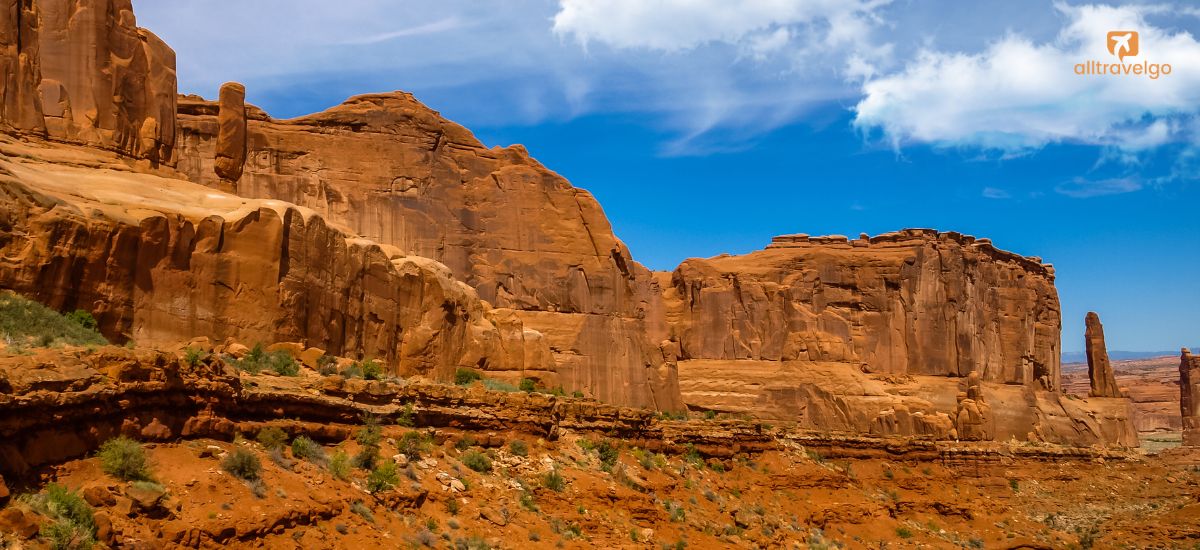
A national parks road trip is one of the best-value adventures you can take in the United States but 2026 brought the biggest shake-up to park fees and reservations in years, and planning around the old rules will cost you money and time at the gate.
This guide walks you through the entire process: choosing your route, timing your trip, buying the right pass, booking reservations, budgeting realistically, and packing so nothing derails your days. Everything reflects the current 2026 rules.
Quick Overview:
For most US residents visiting three or more fee-charging parks, buy the $80 America the Beautiful annual pass, plan your route as a loop of 3–5 parks within one region, travel midweek in the shoulder season (late spring or early fall), and check Recreation.gov for reservations before you go — only a handful of parks still require them in 2026.
Why a National Parks Road Trip Is Worth It
The US has 63 designated national parks and more than 400 total Park Service sites, and the road between them is often as memorable as the destinations. A self-drive trip gives you control over pace, cost, and detours that a tour never will.
It also scales to any budget. You can car-camp your way through Utah for the price of gas and campsite fees, or base yourself in comfortable lodges and eat well. The framework below works either way.
Step 1: Choose Your Region and Route
The single biggest planning mistake is trying to see too much. Parks are far apart, and long transit days eat the trip. Instead of chasing a nationwide checklist, pick one region and build a loop of three to five parks.
Strong regional clusters:
- Utah’s Mighty 5 — Zion, Bryce Canyon, Capitol Reef, Arches, Canyonlands. The most efficient multi-park loop in the country.
- California Sierra & desert — Yosemite, Sequoia, Kings Canyon, Death Valley.
- Greater Yellowstone — Yellowstone and Grand Teton, easily paired.
- Pacific Northwest — Mount Rainier, Olympic, North Cascades.
- Desert Southwest — Grand Canyon, plus nearby Arizona and Utah sites.
Aim for no more than three to four hours of driving on any park-to-park travel day. Give each major park at least two full days.
Step 2: Pick the Right Time to Go
Timing changes everything — crowds, weather, road access, and cost.
- Summer (June–August): Everything is open, but this is peak crowds and peak prices. Marquee parking lots fill by mid-morning.
- Shoulder season (late April–May, September–October): The sweet spot. Fewer people, milder temperatures, lower lodging rates. Note that some park facilities now run reduced hours outside peak summer, so confirm services before you rely on them.
- Winter (November–March): Quiet and beautiful, but high-elevation roads close. Best for desert parks and snow-specific trips.
Whenever you go, travel midweek if you can. Tuesday through Thursday is materially calmer than a weekend at every popular park.
Step 3: Understand 2026 Passes and Fees
This is where 2026 rewrote the rules, so read carefully.
The America the Beautiful annual pass covers entrance fees at more than 2,000 federal recreation sites for 12 months from the month of purchase. As of January 1, 2026, pricing splits by residency:
- US residents: $80
- Non-US residents: $250
The pass admits the holder plus everyone in one private vehicle at per-vehicle parks, or the holder plus three adults where per-person fees apply. Children 15 and under always enter free. In 2026 the passes also went digital through Recreation.gov and now cover two motorcycles.
New nonresident surcharge: Non-US residents aged 16 and older pay an extra $100 per person to enter 11 of the most-visited parks — Acadia, Bryce Canyon, Everglades, Glacier, Grand Canyon, Grand Teton, Rocky Mountain, Sequoia & Kings Canyon, Yellowstone, Yosemite, and Zion — unless they hold the $250 nonresident annual pass, which waives it. For nonresidents visiting two or more of these parks, the $250 pass pays for itself quickly.
Is the $80 pass worth it? A simple decision framework
| Your situation | Recommendation |
|---|---|
| US resident visiting 3+ fee-charging parks in 12 months | Buy the $80 pass — it almost always saves money |
| US resident visiting only 1 park | Skip it — a single vehicle fee ($20–$35) is cheaper |
| Non-US resident visiting 2+ surcharge parks | Buy the $250 nonresident pass |
| Age 62+ | Buy the $20 Senior Annual or $80 Senior Lifetime instead |
| Active military or dependent | The Military Annual pass is free |
| Visiting only fee-free parks (e.g. Great Smoky Mountains) | Skip it — those parks never charge entry |
Important: the pass covers entrance only. Campgrounds, timed-entry reservations, and shuttle tickets are separate fees. Buy the digital pass through Recreation.gov for instant use, and if you order a physical pass, allow one to three weeks for delivery.
Fee-free days for 2026 (US residents only): Presidents Day (Feb 16), the first day of National Park Week (Apr 18), the Great American Outdoors Act anniversary (Aug 4), Constitution Day (Sep 17), Theodore Roosevelt’s birthday (Oct 27), and Veterans Day (Nov 11). Free entry means bigger crowds, and it never waives a separate reservation or permit.
Step 4: Sort Out Reservations and Permits
Good news for 2026: several major parks dropped their timed-entry systems. Yosemite, Glacier, Arches, and Mount Rainier no longer require timed-entry reservations. They now manage crowds with real-time traffic control instead, which means rangers may temporarily divert cars when lots fill — so arriving early still matters.
Parks and features that still require an advance reservation or permit in 2026 include:
- Rocky Mountain NP — timed-entry reservation, roughly late May through mid-October.
- Glacier NP — no vehicle reservation, but the Logan Pass shuttle is now ticketed ($1 per rider via Recreation.gov), and Logan Pass parking is time-limited in peak summer.
- Acadia NP — vehicle reservation required for Cadillac Summit Road, roughly May–October.
- Haleakalā NP — sunrise viewing reservation.
- Zion NP — Angels Landing permit by lottery.
- Yosemite NP — Half Dome permit by lottery.
Rules change every season, so treat Recreation.gov and each park’s official NPS page as the final word and check them a few weeks before you travel. Reservations typically release on a rolling basis, sometimes months ahead for the most popular slots, so book as early as your dates are firm.
Step 5: Budget Your Trip
Here’s a realistic per-person range for a one-week, two-traveler road trip, excluding flights to your starting city.
| Expense | Budget | Mid-range |
|---|---|---|
| America the Beautiful pass (per trip, shared) | $80 total | $80 total |
| Fuel (1,000–1,500 miles) | $120–$180 | $120–$180 |
| Lodging (7 nights) | Camping $105–$210 | Hotels/lodges $700–$1,400 |
| Food | $150–$250 | $350–$500 |
| Rental car (if needed) | $350–$500 | $500–$800 |
| Reservations, permits, extras | $20–$60 | $50–$120 |
A camping-based trip can come in around $400–$600 per person for the week; a lodge-and-restaurant version runs $1,200–$2,000 per person.
Paying with a travel rewards card on fuel, lodging, and dining can offset a meaningful share of these costs.
Suggested read: The Best Travel Gear to Make Any Trip a Breeze and Stress-Free!
Step 6: Book Your Vehicle and Lodging
Vehicle
A standard SUV handles nearly every paved park road comfortably. You rarely need 4WD unless you’re driving specific backcountry routes. Confirm size limits — Zion, for example, restricts oversized vehicles on the Zion–Mt. Carmel Highway.
Lodging
In-park lodges book out 6–12 months ahead for peak dates, so reserve early or plan to stay in gateway towns like Springdale (Zion), Moab (Arches/Canyonlands), or West Yellowstone. Campgrounds inside parks go through Recreation.gov and are worth booking the moment your dates are set.
Whatever you book, keep confirmations offline — cell service is unreliable or absent across much of the park interior.
Step 7: Pack the Essentials
Cell coverage, food options, and weather all get less predictable inside parks, so pack to be self-sufficient.
Core checklist:
- Navigation: offline maps downloaded in advance, a paper backup, and a phone car mount.
- Hydration: refillable bottles plus a gallon or more of backup water per person per day in desert parks.
- Layers: temperatures swing 30–40°F between valley floors and high elevations; pack for both.
- Footwear: broken-in hiking shoes or boots.
- Sun protection: hat, sunglasses, high-SPF sunscreen.
- Power: a portable power bank and a car charger — see our picks for the best power banks for travel.
- Food: a cooler with snacks and lunch supplies to avoid pricey, limited in-park dining.
- Daypack: to carry it all on the trail — see the best travel backpacks.
- First aid and any personal medications.
For a printable, trip-wide version, use our road trip packing list.
Five Proven Road Trip Routes
- Utah’s Mighty 5 (7–10 days): Zion → Bryce Canyon → Capitol Reef → Arches → Canyonlands. The gold-standard multi-park loop.
- Yellowstone & Grand Teton (5–7 days): Two iconic parks side by side, ideal for wildlife and geysers.
- California Parks (7–10 days): Yosemite → Sequoia → Kings Canyon → Death Valley. Waterfalls, giant trees, and desert extremes.
- Pacific Northwest (7 days): Mount Rainier → Olympic → North Cascades. Rainforest, coastline, and alpine peaks.
- Grand Circle (10–14 days): Grand Canyon plus the Utah and Arizona sites — the ultimate Southwest expedition.
Common Mistakes to Avoid
- Over-scheduling. Fewer parks, more days each. Transit days are not park days.
- Buying the wrong pass. Run the decision framework above before you pay.
- Assuming old reservation rules. Check Recreation.gov for the current season — several parks changed in 2026.
- Relying on cell service. Download everything offline first.
- Arriving mid-morning. Popular lots fill early; be at the gate near opening or come late afternoon.
- Underestimating distances. Park-to-park drives are longer than they look on a map.
Frequently Asked Questions
How much does an America the Beautiful pass cost in 2026?
$80 for US residents and $250 for non-US residents. It covers entrance for one vehicle at more than 2,000 federal recreation sites for 12 months from the month of purchase.
Do I need a reservation to visit national parks in 2026?
Only some. Yosemite, Glacier, Arches, and Mount Rainier dropped timed-entry reservations for 2026. Rocky Mountain still requires one in peak months, and specific features — Acadia’s Cadillac Summit Road, Zion’s Angels Landing, Yosemite’s Half Dome, Glacier’s Logan Pass shuttle — still need reservations or permits. Always confirm on Recreation.gov before you go.
What’s the cheapest way to do a national parks road trip?
Travel in the shoulder season, camp instead of using lodges, buy the $80 annual pass if you’re hitting three or more parks, and bring your own food. A camping-based week can run around $400–$600 per person.
When is the best time for a national parks road trip?
Late spring and early fall (shoulder season) offer the best mix of open access, mild weather, smaller crowds, and lower prices. Travel midweek whenever possible.
How many parks should I visit in one trip?
Three to five within a single region for a week-long trip. Give each major park at least two full days and keep park-to-park drives under about four hours.
Are national parks free on any days in 2026?
Yes — six fee-free days for US residents: Feb 16, Apr 18, Aug 4, Sep 17, Oct 27, and Nov 11. Free entry doesn’t waive separate reservation or permit fees, and crowds are heavier on these days.
Start Planning
A great national parks road trip comes down to a few smart decisions made early: pick one region, go in the shoulder season, buy the right pass, lock in any reservations, and pack to be self-sufficient. Get those right and the rest of the trip takes care of itself.
Ready for the next step? Map your route with our road trip planning guide, then build your packing list and choose the travel card that earns the most on the road.
Fees, pass prices, and reservation rules are current as of 2026 but can change mid-season. Always verify details on Recreation.gov and the official NPS page for each park before you travel.



One thought on “US National Parks Road Trip: The Complete Planning Guide”
Comments are closed.