


A great road trip feels spontaneous, but the ones that actually go smoothly are planned in advance. The difference between a trip where you’re relaxed and present, and one where you’re stressed about money, directions, or a car that isn’t ready, comes down to a handful of decisions made before you ever start the engine.
This guide walks through exactly how to plan a road trip from the ground up: mapping your route, setting a realistic budget, prepping your vehicle, booking lodging, and packing so nothing gets left behind. Whether you’re planning a weekend loop or a multi-week cross-country drive, the same framework applies.
Quick Answer
To plan a road trip, pick your destination and route first, then build your budget around fuel, lodging, food, and activities. Book flexible lodging in advance for peak-season trips, get your car inspected a week before departure, download offline maps, and pack a road trip essentials kit (documents, snacks, chargers, first aid, layers). Aim to plan major routes and bookings 3–6 weeks ahead, and keep 1–2 days unscheduled for detours
Step 1: Choose Your Destination and Route
Start with the “why” of the trip scenery, national parks, cities, or a mix then work backward into a route.
- Point-to-point vs. loop: A loop route (start and end in the same city) is usually cheaper and simpler than a one-way trip, which often carries a one-way rental car fee.
- Drive time per day: Cap driving at 5–6 hours (roughly 300–350 miles) on travel days so you still have energy left to enjoy the stop. Longer days are fine occasionally, but back-to-back long drives are the #1 reason road trips feel exhausting instead of fun.
- Anchor stops first: Pick 2–4 “must-see” anchor destinations, then fill in the route between them. This keeps the trip from becoming an unfocused checklist.
- Build in slack: Leave at least one unplanned day for every five on the road. Weather, closures, and “we want to stay longer here” moments are common.
Use a mapping tool to lay out the full route and check estimated drive times before you commit to dates Google Maps and Waze both allow multi-stop route planning, and AAA’s TripTik tool is a solid alternative built specifically for road trips, with routing that accounts for construction and road conditions.
If a national park is part of your route, timing and reservations matter more than most people expect see our US National Parks Road Trip Planning Guide for pass prices, reservation rules, and regional loop ideas.
Step 2: Time Your Trip
When you go affects cost, crowds, and comfort as much as where you go.
- Shoulder season (spring and fall) generally offers the best mix of lower prices, thinner crowds, and mild weather across most of the US.
- Summer means longer daylight hours and full access to high-elevation roads, but also the highest gas, lodging, and campsite demand of the year.
- Weekday travel is consistently cheaper and less congested than weekend travel for both lodging and popular attractions.
- Check regional events — festivals, holiday weekends, and local conferences can spike hotel prices in an otherwise ordinary week.
If fall foliage or a specific season is part of the appeal, plan a few weeks earlier than you think you need to, since peak color and peak crowds tend to arrive at the same time.
Step 3: Set a Realistic Road Trip Budget
Budgeting is where most road trip plans fall apart, not because people don’t budget, but because they forget a category. Here’s a full breakdown for a one-week road trip for two people, in the US.
Category | Budget Range | What Affects It |
Fuel | $150–$350 | Total mileage, vehicle MPG, gas prices by region |
Lodging (6–7 nights) | $250–$1,200 | Camping vs. budget motels vs. mid-range hotels |
Food | $200–$450 | Cooking/groceries vs. eating out every meal |
Vehicle costs | $0–$500 | Owned car (maintenance only) vs. a rental |
Activities & entry fees | $50–$300 | National parks, museums, tours, attractions |
Tolls & parking | $20–$100 | Route-dependent; some corridors add up fast |
Emergency buffer | 10–15% of total | Always budget a cushion for the unexpected |
A rough rule of thumb: a bare-bones camping road trip can run $70–$120 per person per day, while a comfortable hotel-and-restaurant trip typically lands between $150–$300 per person per day.
Ways to cut road trip costs without cutting the fun
- Cook breakfast and pack lunches; save restaurant meals for dinner.
- Use a fuel-price app to route toward cheaper gas stations along the way.
- Book lodging with free cancellation, then re-shop prices closer to the date.
- Travel with 3-4 people to split fuel and lodging costs per person.
- Use a rewards travel credit card for fuel, food, and lodging spend to offset costs our guide to the best travel credit cards breaks down which cards earn the most on road trip categories.
For a fuel-cost estimate specific to your vehicle, the US Department of Energy’s fueleconomy.gov trip calculator is a reliable, government-run tool that factors in your car’s actual MPG rating.
Step 4: Prep Your Vehicle
A breakdown in the middle of nowhere is the single most common thing that turns a good road trip into a bad one. About a week before departure:
- Get an oil change if you’re due, or close to due, within the trip mileage.
- Check tire tread and pressure, including the spare.
- Test brakes, headlights, taillights, and wipers.
- Top off coolant, brake fluid, and washer fluid.
- Confirm your roadside assistance coverage is active, or add a plan before you go.
If you’re renting instead of driving your own car, book early for the best rate, confirm mileage limits, and check whether a one-way rental (different pickup and drop-off cities) adds a surcharge.
Step 5: Book Lodging Strategically
- Peak season or popular routes: book 1–3 months out, especially near national parks or in small towns with limited inventory.
- Off-season or flexible routes: you can often book a night or two ahead, which keeps the trip spontaneous.
- Mix accommodation types a few hotel nights bookended around a couple of nights camping is often the best balance of cost and comfort.
- Keep confirmations offline. Screenshot or download booking confirmations, since cell service disappears in rural stretches and national parks.
Step 6: Pack for the Road, Not Just the Destination
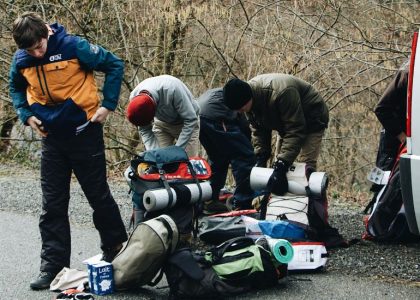
Road trip packing is different from flight packing you’re not limited by a suitcase, but you do need to think about what you’ll use in the car versus what stays packed until you arrive.
Core road trip packing list:
- Documents: driver’s license, insurance card, registration, any park passes or reservation confirmations.
- Navigation backup: offline maps downloaded in advance, plus a phone mount and car charger.
- Comfort layer: a bag within reach that has snacks, water, sunglasses, a phone charger, and any medication so you’re not digging through the trunk at every stop.
- Weather layers: temperatures can swing 20–30°F between morning and afternoon, or between elevations, so pack for both.
- First aid kit and a basic emergency kit (flashlight, jumper cables, blanket).
- Cooler with drinks and easy meals to cut food costs and avoid relying on gas-station food.
- Power: a portable power bank for phones and cameras when you’re away from the car see our picks for the best portable power banks for travel.
- Connectivity: if your route crosses areas with weak carrier coverage, a travel eSIM can be a useful backup we compared options in our best eSIM for USA travel guide.
- A daypack for hikes or day stops away from the car our best travel backpacks guide covers options built for exactly this.
For a complete, printable version organized by category, use our Ultimate Road Trip Packing List (free checklist).
Step 7: Plan for Connectivity and Safety
- Download offline maps for your entire route, not just the destination
- coverage gaps are common in rural areas and mountain passes.
- Share your route and expected check-in times with someone not on the trip.
- Keep a physical, printed copy of key addresses and reservation numbers as a backup.
- If you’re relying on your phone for music, navigation, and photos simultaneously, battery drain adds up fast this is where a car charger and a power bank both earn their space in the packing list.
- A few useful road trip apps for gas prices, campsite booking, and route conditions can save real money and time we’ve rounded up our favorites in the best travel apps for road trips guide.
Common Road Trip Planning Mistakes to Avoid
- Overpacking the itinerary. Fewer stops with more time at each beats a checklist you’re rushing through.
- Underestimating drive time. Mountain and rural roads take longer than the map suggests.
- Skipping the vehicle check. Preventable breakdowns are the most common trip-ender.
- Booking non-refundable lodging too early, before your route is finalized.
- Forgetting the food budget, which is often the most underestimated line item.
- Not building in a buffer day for weather, fatigue, or a place you didn’t expect to love.
Frequently Asked Questions
How far in advance should I plan a road trip?
For most trips, start mapping your route and rough budget 4–6 weeks ahead. If your trip includes national parks, holiday weekends, or popular small towns, book lodging and any required reservations 1–3 months out.
How much does a road trip cost per day?
A budget-conscious, camping-based road trip typically runs $70–$120 per person per day. A comfortable trip with hotels and restaurant meals runs $150–$300 per person per day. Fuel, lodging, and food are the three biggest variables.
How many miles should you drive in a day on a road trip?
Aim for 300–350 miles or about 5–6 hours of driving per day. This leaves enough time and energy to actually enjoy your stops instead of arriving exhausted.
What is the best way to plan a road trip route?
Pick 2–4 anchor destinations first, then map the connecting route with a tool like Google Maps, Waze, or AAA’s TripTik. Build in at least one unscheduled day for every five days of driving.
What should I always pack for a road trip?
At minimum: navigation backup, phone charger and power bank, snacks and water, a first aid kit, weather-appropriate layers, and your key documents (license, insurance, registration). See our full road trip packing checklist for the complete list.
Is it cheaper to road trip or fly?
For groups of two or more traveling under roughly 700–800 miles, driving is usually cheaper than flying once you factor in airfare, checked bags, and rental cars at the destination. Beyond that distance, the math starts to favor flying, especially for a single traveler.
Final Thoughts
Planning a road trip really comes down to five decisions: where you’re going, how you’re getting there, what it will cost, where you’re sleeping, and what’s in the car with you. Nail those down early, leave room for flexibility, and the trip plans itself from there.
Next up: build your full packing list, check the best time to catch fall color on your route, and pick a travel card that earns rewards on every mile you drive.



2 thoughts on “How to Plan a Road Trip: Budget, Route & Packing (2026 Guide)”
Comments are closed.